Automated Compliance for Modern Organizations
DataFence continuously monitors your data protection practices, ensuring compliance with global regulations while reducing audit preparation time by 90%.
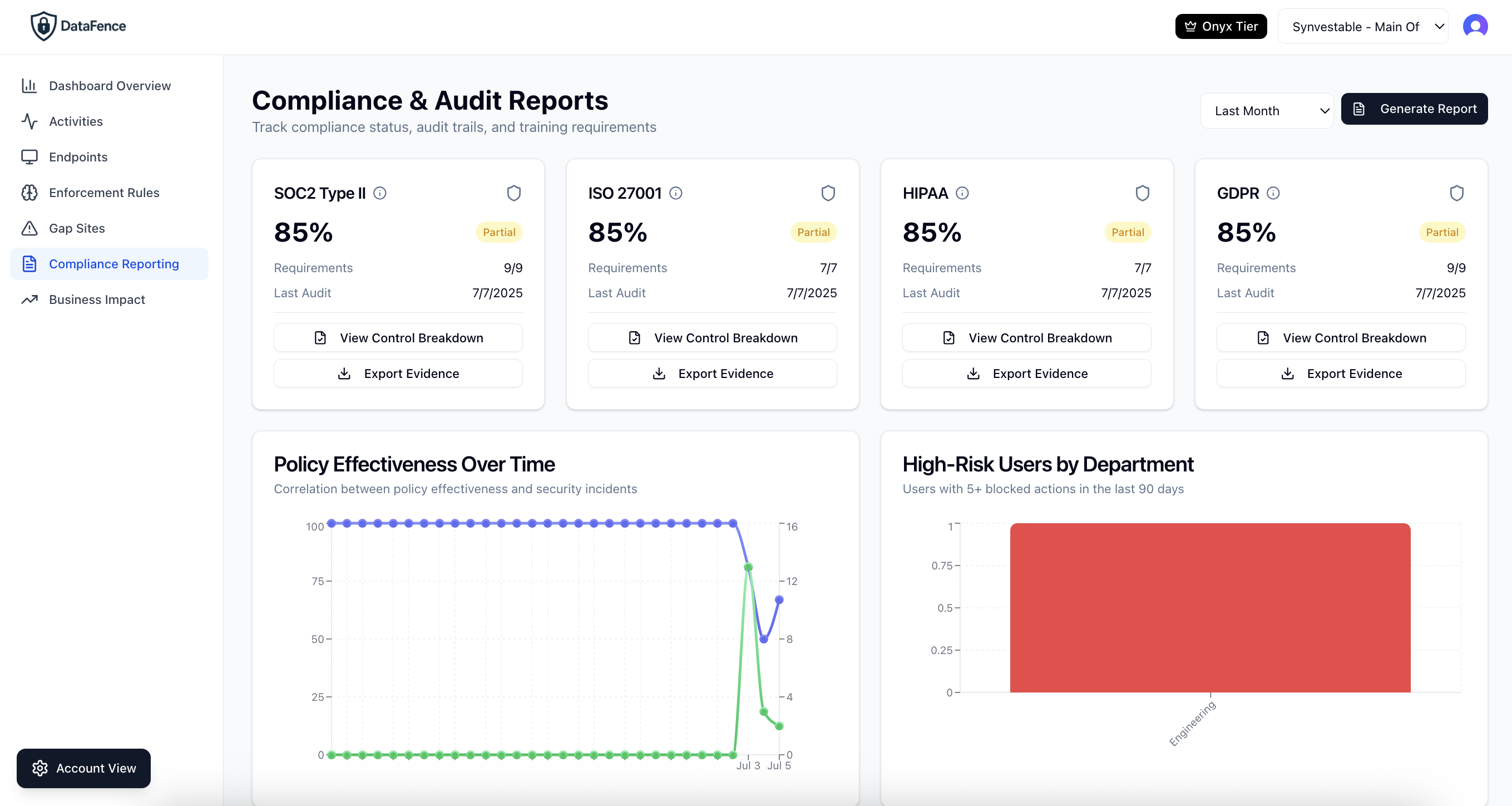
Multi-Regulation Support
Stay compliant with multiple regulatory frameworks simultaneously. Our platform automatically maps your data protection controls to requirements for:
- GDPR: EU data protection and privacy requirements
- HIPAA: Healthcare data security and privacy
- SOC 2: Security, availability, and confidentiality
- CCPA/CPRA: California consumer privacy rights
- PCI DSS: Payment card industry standards
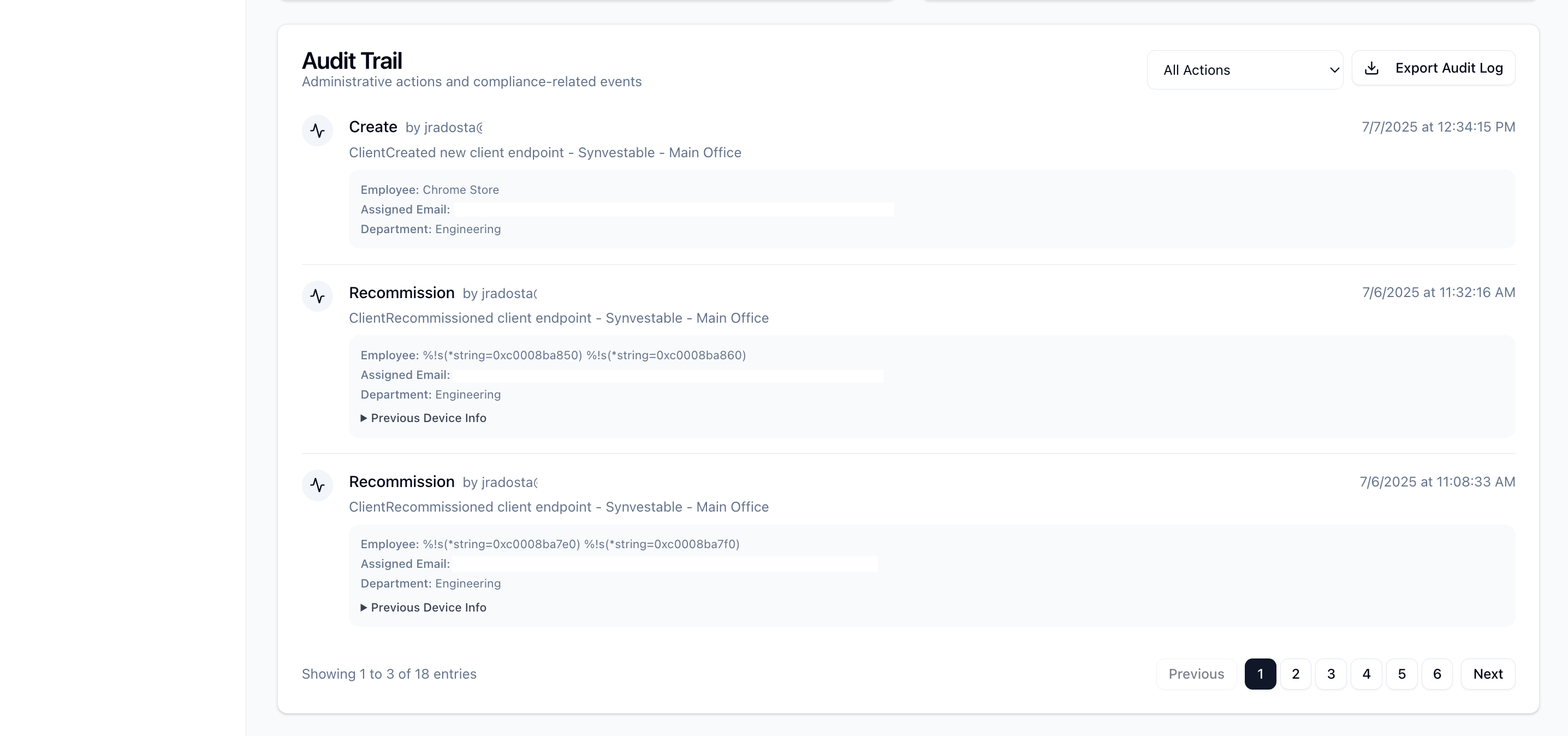
Comprehensive Audit Trails
Every data protection action is automatically logged and timestamped, creating an immutable audit trail that satisfies the most stringent compliance requirements:
- Activity logging: Every file upload attempt, block, and warning
- Admin actions: Policy changes, user management, configurations
- Export ready: Generate audit reports in multiple formats
- Tamper-proof: Cryptographically secured audit logs
Compliance Features
Real-Time Alerts
Instant notifications for compliance violations, policy breaches, or suspicious activities that require immediate attention.
Compliance Scoring
Track your compliance posture with real-time scoring across all regulatory frameworks. Identify gaps before auditors do.
Policy Mapping
Automatically map your DataFence policies to specific regulatory requirements, ensuring complete coverage.
Data Subject Rights
Manage GDPR data subject requests including access, deletion, and portability with automated workflows.
Scheduled Reports
Automatically generate and distribute compliance reports to stakeholders on a daily, weekly, or monthly basis.
Breach Detection
Identify potential data breaches early with intelligent monitoring and meet notification deadlines required by law.
Your Compliance Command Center
GDPR Compliance Score
HIPAA Controls Met
Avg. Audit Prep Time
Continuous Monitoring
Why Choose DataFence for Compliance?
Reduce Audit Preparation Time by 90%
With automated evidence collection and pre-built compliance reports, audits become a breeze instead of a burden.
Avoid Costly Fines and Penalties
Proactive monitoring and alerts help you fix compliance issues before they become expensive regulatory violations.
Build Customer Trust
Demonstrate your commitment to data protection with transparent compliance practices and certifications.
Frequently Asked Questions About Compliance Monitoring
Expert answers on security compliance, regulations, and best practices
What is compliance monitoring and why is it important?
What is security compliance and how does it differ from general compliance?
How do you ensure GDPR compliance?
What are the key requirements for HIPAA compliance?
How does SOC 2 compliance work?
What is the cost of compliance monitoring software?
How can compliance monitoring reduce audit preparation time?
What should I look for in a compliance monitoring solution?
Start Your Compliance Journey Today
Join thousands of organizations trusting DataFence for their compliance needs